
2016-2025: Principal achievements of trAndeS
trAndeS was an advanced and structured program based at the Pontificia Universidad Católica del Perú (PUCP) that contributed to sustainable development in the Andean region through its research and training activities. The project partners were the Freie Universität Berlin (FU Berlin) and the Pontificia Universidad Católica del Perú (PUCP). trAndeS was administered by the German Academic Exchange Service (Deutscher Akademischer Austauschdienst, DAAD) with funding from the Federal Ministry for Economic Cooperation and Development (Bundesministerium für Wirtschaftliche Zusammenarbeit und Entwicklung, BMZ).
Throughout its implementation, trAndeS strengthened academic cooperation between the PUCP and the FU Berlin, bringing together diverse initiatives in teaching, research, and graduate training based on a research agenda that explores the relationship between social inequalities and the opportunities of sustainable development.
Here is a link to a video summarizing the program’s work and achievements (in Spanish).
You may also consult our institutional report (in Spanish).
Below is a summary of the main components of the project.

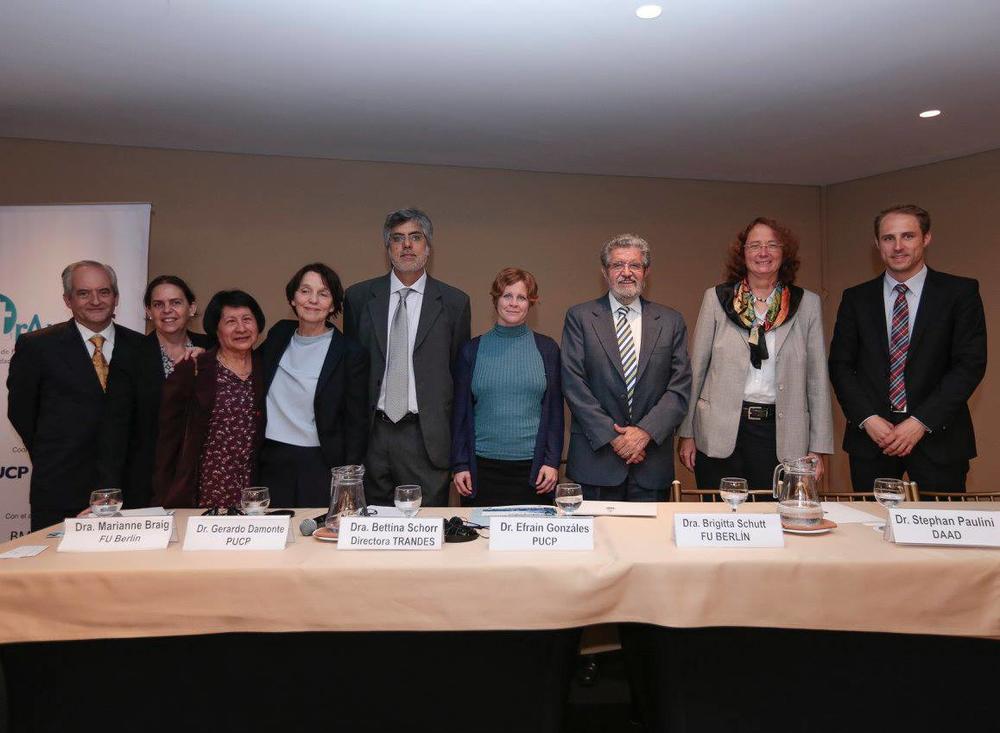

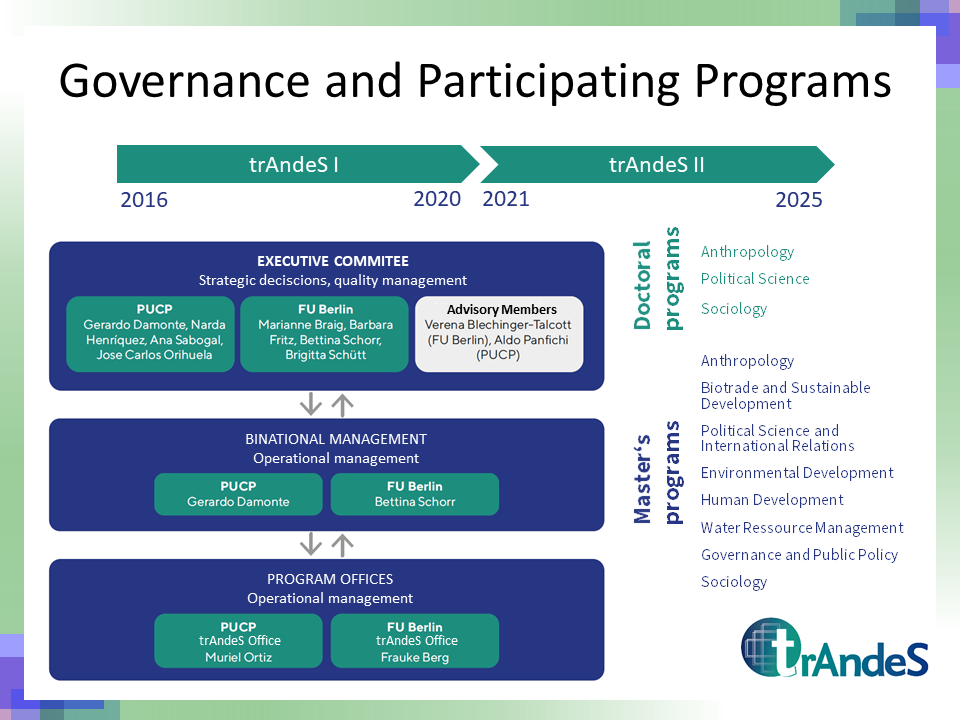
The trAndeS program was developed in two phases, the first between 2016 and 2020, and the second from 2021 to 2025. Its implementation was made possible through the coordination of various institutional units that ensured both academic and administrative management.
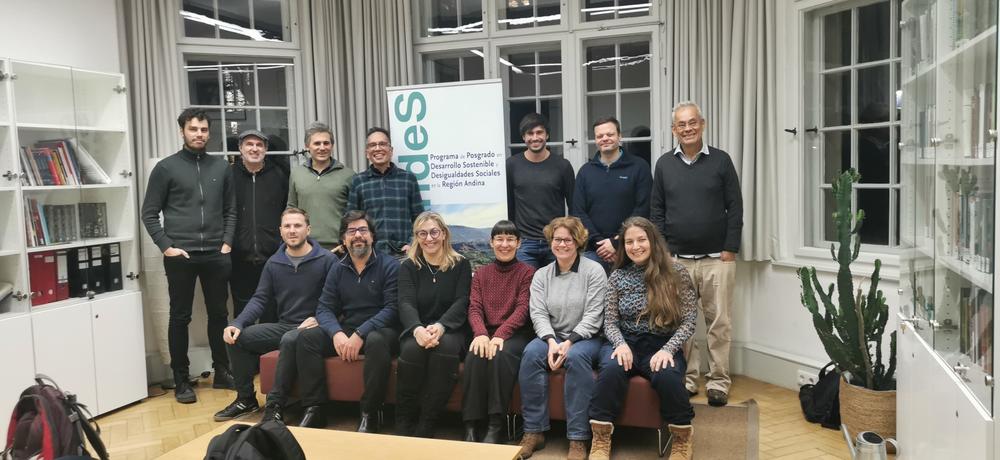
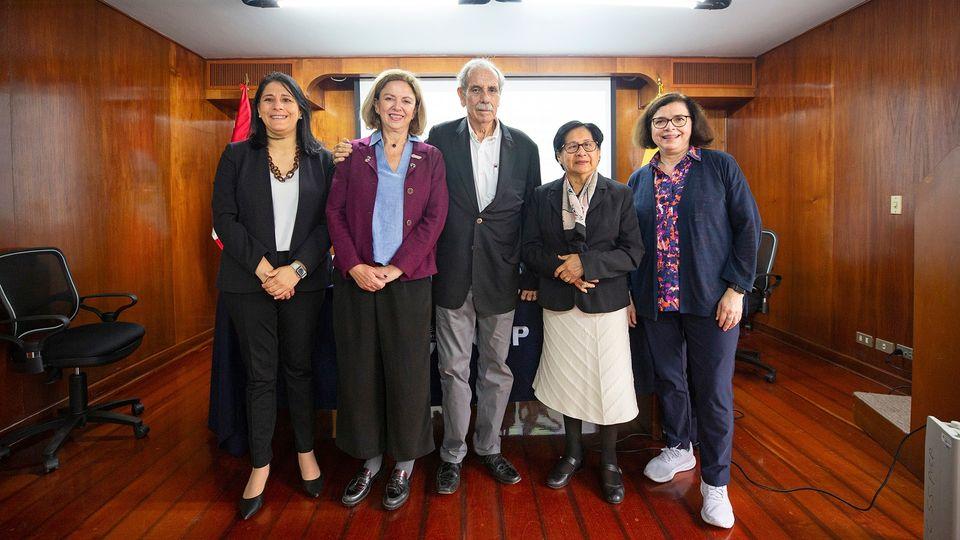
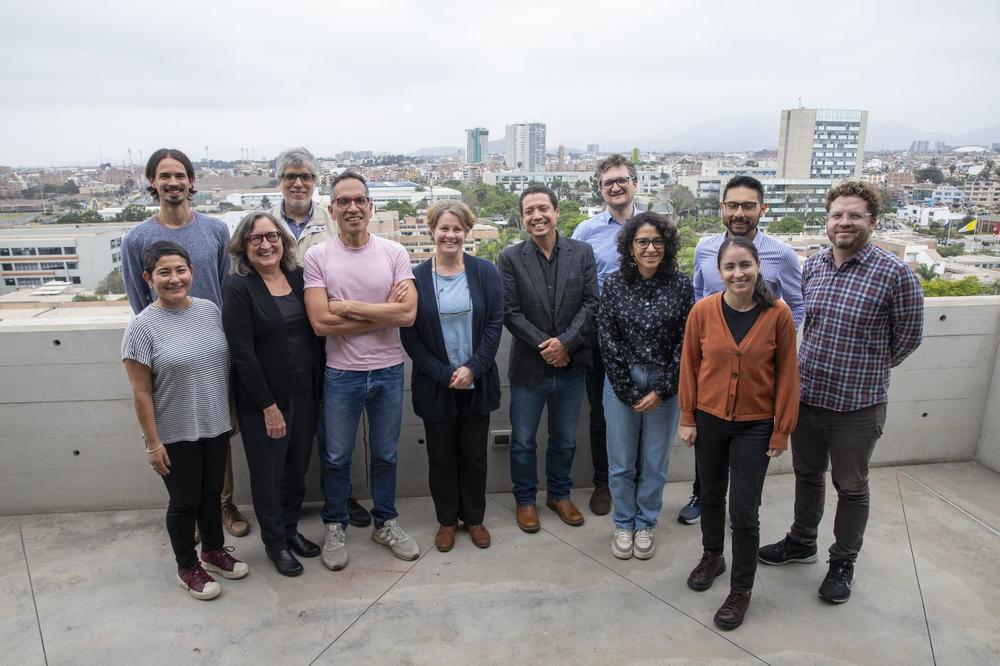
trAndeS was governed by a binational Executive Committee composed of Gerardo Damonte (PUCP), Narda Henríquez (PUCP), José Carlos Orihuela (PUCP), Ana Sabogal Dunin (PUCP), Marianne Braig (FU Berlin), Barbara Fritz (FU Berlin), Bettina Schorr (FU Berlin), and Brigitta Schütt (FU Berlin). This Committee made strategic decisions and oversaw the quality of the program. The work was also supported by an advisory group tasked with contributing to the strategic and academic strengthening of the project, composed of Aldo Panfichi (PUCP) and Verena Blechinger-Talcott (FU Berlin).
The Binational Coordination, carried out by Bettina Schorr (FU Berlin) and Gerardo Damonte (PUCP), coordinated operational activities between the partner institutions, while the program offices, led by Muriel Ortiz (PUCP) and Frauke Berg (FU Berlin), ensured administrative management and the daily support required for its functioning.
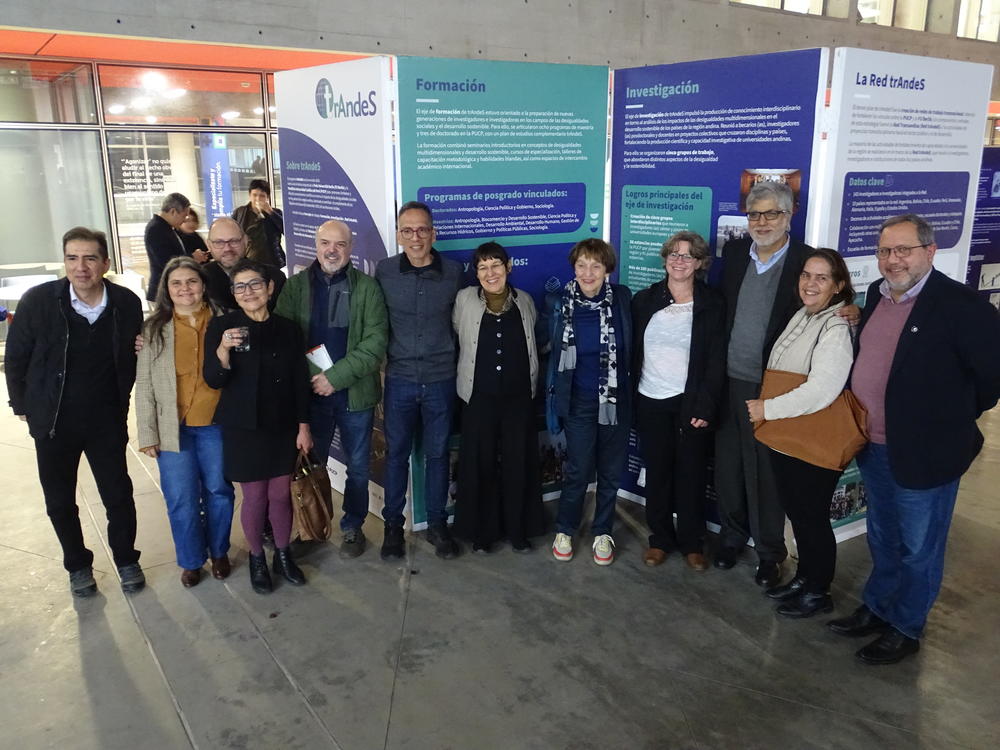
trAndeS developed its work agenda around three pillars: Training (master’s and doctoral), Research, and the trAndeS Network.
In total, eight master’s programs and three doctoral programs from the PUCP Department of Social Sciences participated in trAndeS and were eligible for program certification and scholarships.
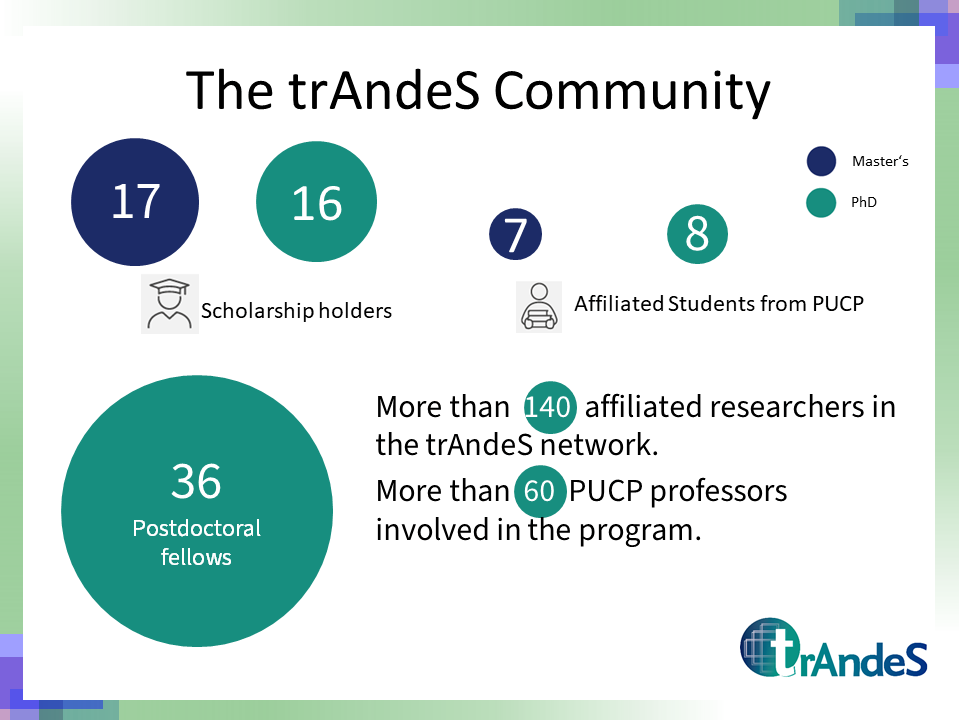
The trAndeS community was made up of a broad and diverse network of scholarship holders, associate students, researchers, and faculty members who contributed to the academic development of the program and to interdisciplinary exchange.
Between 2017 and 2025, the program awarded a total of 17 master’s scholarships, 16 doctoral scholarships, and 36 postdoctoral fellowships.
Likewise, more than 140 affiliated researchers participated in the trAndeS Network, engaging in various activities such as joint publications, the development of workshops and conference panels, as well as co-teaching experiences.
trAndeS achieved significant academic results that reflected the strength of its training and research approach.
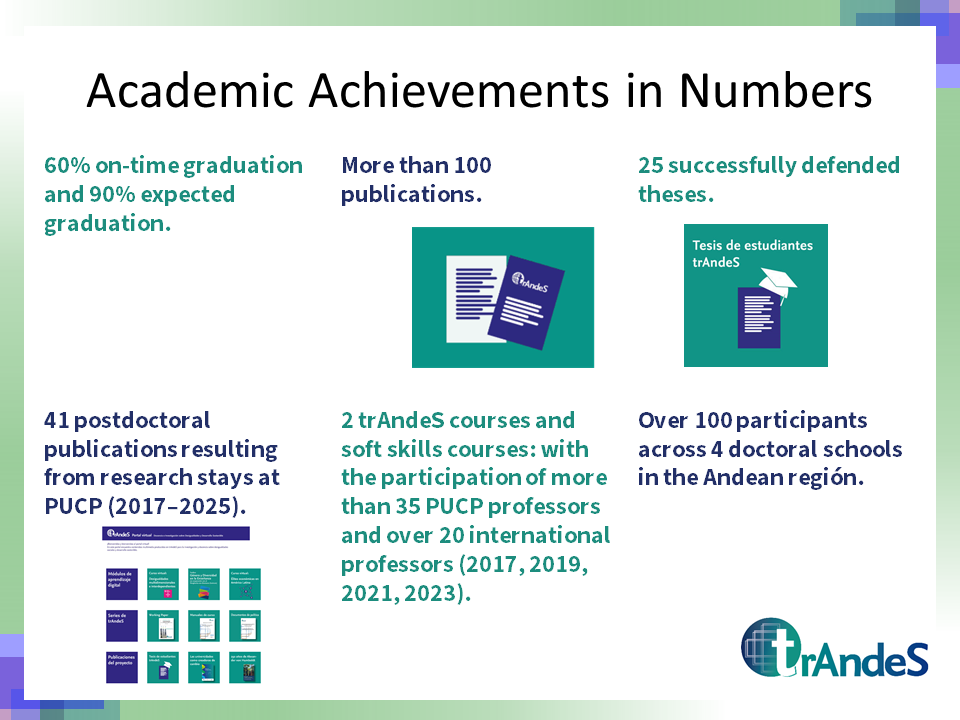
The trAndeS network was consolidated as a transnational space for academic exchange and collaboration on inequalities and sustainability. The Trans-Andean Sustainability Network was strengthened, coordinating research and teaching efforts in several countries in the region.The trAndeS Network came to include 143 researchers in 12 countries, promoting sustained academic cooperation.
From this collaboration emerged:
- New academic collaboration initiatives, both between institutions and among research groups.
- Regional integration processes based on common research topics, with an emphasis on the challenges of the Andean region.
Within the network, research clusters were consolidated in the following areas:
- Energy transition
- Development traps
- Environmental state
- Environmental public opinion
- Inequalities and care
- Urban ecology
trAndeS has implemented four doctoral schools in Lima (at PUCP), Santiago de Chile (in cooperation with COES), Cuenca (in cooperation with Universidad de Cuenca) and La Paz (in cooperation with CIDES).
The program left as a legacy a virtual portal and archive that brought together training resources, academic materials and audiovisual products accessible to the public.
Digital Learning Modules
- Virtual course: “Multidimensional and Interdependent Inequalities”
- Virtual course: “Economic Elites in Latin America”
- Toolbox: “Gender and Diversity in Teaching”
Developed in cooperation with the Margherita-von-Brentano-Zentrum of FU Berlin.
trAndeS Series
The program produced a variety of series and academic materials:
- Working Papers: 15 documents
- Course manuals: 21 documents
- Policy papers: 5 documents
Project Publications
Among the publications generated within the trAndeS framework were:
- Individual publications by members of the trAndeS community
- Publications produced with trAndeS support
- Publications by affiliated researchers linked to the network
- Audiovisual Material

Between 2016 and 2025, trAndeS organized and supported numerous academic activities, such as conferences, seminars, workshops, summer and winter schools, as well as regional network meetings.
The record of these activities and events (2016–2025), together with their photographic documentation, remained available here.